

16 Types of Machining Equipment at a Glance
Drilling and boring can be successive operations on the same hole. To identify a machine, look at the feature it produces and how the tool and workpiece move.
Start by identifying the faces and holes that determine how the part fits. A mounting plate may need a milled seating face and a locating bore with a controlled diameter. One machining center can perform several operations, but milling, drilling and finish boring serve different purposes.
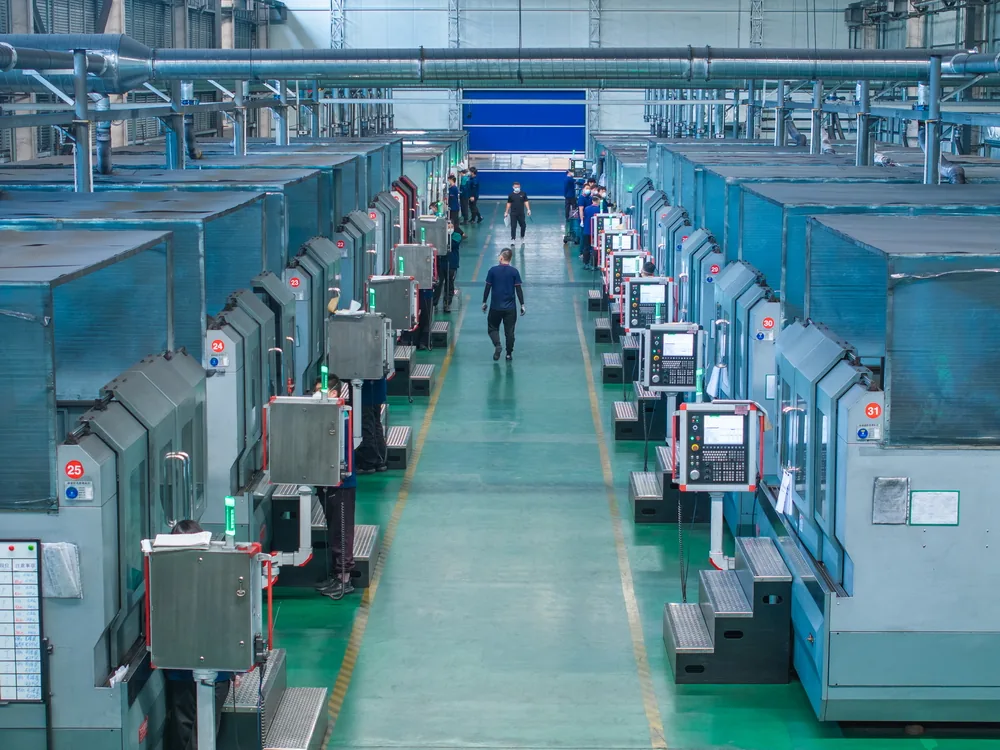
Milling faces and slots
- 01 Three-axis vertical machining center
- Mills faces and slots. Three linear axes let the tool reach several features from one direction.
- 02 Four-axis vertical machining center
- A rotary axis indexes the workpiece to expose its sides.
- 03 Five-axis vertical machining center
- Two rotary axes allow different tool orientations for complex surfaces.
- 04 Horizontal machining center
- A horizontal spindle provides access to multiple faces of housings.
- 05 Gantry machining center
- Often used for large parts. Common layouts include traveling-table and moving-gantry designs. Whether the crossbeam can move is a separate design feature; confirm the actual motions for the machine model.
Making holes and turning round parts
- 06 Drilling machine
- A drill cuts a hole into the workpiece.
- 07 Boring machine
- A boring tool enlarges and trues an existing hole to the required dimensions.
- 08 Horizontal lathe
- The workpiece turns about a horizontal axis, commonly for shafts and sleeves.
- 09 Vertical lathe
- Large discs and rings sit flat on a table rotating about a vertical axis.
Grinding and electrical discharge machining
- 10 Surface grinder
- A grinding wheel finishes flat surfaces such as datum faces.
- 11 Cylindrical grinder
- The workpiece rotates while the wheel grinds its outside diameter.
- 12 Wire EDM machine
- An electrode wire follows a contour through conductive material, for example to form a shaped through-hole.
- 13 Sinker EDM machine
- A shaped electrode erodes a conductive workpiece to form features such as blind cavities.
Cutting and bending sheet material
- 14 Laser cutter
- A focused laser cuts the programmed contour in sheet material.
- 15 Waterjet cutter
- A high-speed waterjet follows the contour. Abrasive is typically added when cutting metals.
- 16 Press brake
- A punch and die bend a cut sheet to the required angle.
From machine names to the drawing
Consider a housing with two bores that must share an axis. Choose the locating face first, then check how the tool reaches each bore. A horizontal spindle gives access from the side and a rotary table can index the housing. Datum selection, boring-bar overhang and inspection still determine whether the finished bores meet the drawing.
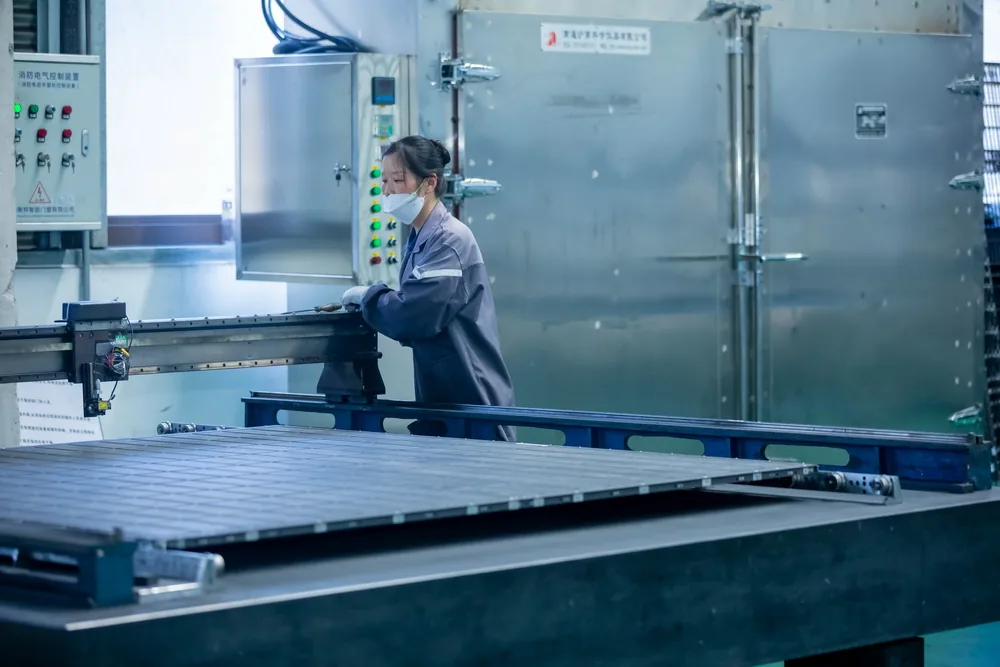
Why can a plate with a hole need three operations?
Imagine a mounting plate with a face that seats against a machine and a bore that locates a shaft. Milling the seating face establishes a datum for workholding and inspection. Drilling removes most of the material quickly, but the drill can wander. A bore can have the right diameter and still be off location. Where both requirements matter, the machinist can leave stock and finish-bore relative to the datum. Inspection then checks diameter and axis location separately. A shaft that slips into the bore establishes neither its position nor its alignment.
What does an additional axis change?
Consider holes on the front and side of one part. A three-axis machine can cut both after reclamping. The challenge is recovering the datum for the second setup. A fourth rotary axis can present the side to the tool without releasing the part. A five-axis machine can also tilt the tool relative to the work, allowing access to a curved surface or clearance around an obstruction. Choose according to tool access, required changes in orientation and workholding. Axis count alone tells little about the accuracy of a simple face slot.
Why does a blind cavity change the process?
Sketch a square recess with a floor beside a square through-hole. Their front views look alike, but a wire electrode must pass through the workpiece. A closed internal contour generally needs a starter hole. A recess with a floor can instead be milled or, in conductive material, formed by sinker EDM. For a tight inside corner, consider cutter radius or electrode shape and spark gap. In this example the sectional view gives the decisive information.
Equipment at Jiufang
The company brochure lists engraving and milling centers, vertical and gantry machining centers, wire-saw cutting equipment, laser welding equipment, and surface and double-side grinders. The 16 machine types in this article are an educational overview, not an inventory of equipment owned by Jiufang. Share your drawing, material, dimensions and critical tolerances to discuss a machining plan.
Technical references: Boring;Sinker EDM